I began my in-patient clinical rotation in early January, hence the lack of posts since then. My clinical site is about 1 hour away from where I live, which makes for early morning. Acute care is the longest rotation, 8 weeks, two of which are staff-relief. The first week was spent with the clinical nutrition manager (CNM) and was focused on building a foundation for the remaining weeks.
Week 1:
Nutrition focused physical exam
Thorough chart reading
Obtaining subjective history, from patient, family and or long term care facility
Assessment chart note
Weeks 2 & 3:
Diabetes and renal with assessments and rescreens of patients on the medical floor
Weeks 4 & 5:
Oncology and surgical assessments and rescreens with an intro to nutrition support
Week 6 (this week):
ICU nutrition support during critical care
Each week the CNM and I review two notes and discuss any and all aspects of the patient and why I chose the given diagnosis. Each day includes discussions of the metabolic state of patients with medication interactions and altered needs due to disease(s).
I am thankful that my acute care rotation is later in my internship, as I have had experience working with other members of the medical team and patient interactions prior.
So far the most interesting highlight has been working with the speech therapist. She let me observe a video swallow study and explained each component. In relation to another patient she explained the difference in a swallow study of a patient post-stroke compared to a patient who has a neuro-degenerative disease (such as Parkinson's). It was important to learn this as the diet order and nutritional concerns for these two diagnoses vary.
Showing posts with label diabetes. Show all posts
Showing posts with label diabetes. Show all posts
Tuesday, February 9, 2016

Wednesday, July 8, 2015
A-Z: Diabetes
Diabetes
There is still much research being done on the progression and cause of diabetes, but this post is a general description of what is known with links for further reading.
Types of Diabetes:
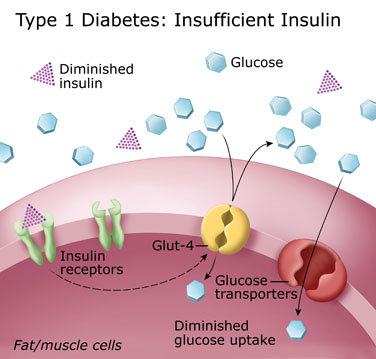
First it is important to know that the sugar you consume is broken into its simplest form, of which the body prefers glucose. In order for body cells to be able to use this glucose for energy, insulin is needed. Insulin is made in the pancreas and then released into the bloodstream as needed (1). There are three types of diabetes:
1. Type I Diabetes

2. Type II Diabetes

Importance of Carbohydrates:
An important part of diabetes management is understanding the importance of carbohydrates. It is common for those with diabetes to count carbohydrates in number of servings to ensure they are consuming consistently during the day (2).
References:
1. Franz MJ. Medical nutrition Therapy for Diabetes Mellitus and Hypoglycemia of Nondiabetic Origin. Krause's Food and Nutrition Care Process. 2012.
2. Insulin Injections. Medline Plus. 2014.
3. Carbohydrate Counting. American Diabetes Assoc. 2015.
There is still much research being done on the progression and cause of diabetes, but this post is a general description of what is known with links for further reading.
Types of Diabetes:
First it is important to know that the sugar you consume is broken into its simplest form, of which the body prefers glucose. In order for body cells to be able to use this glucose for energy, insulin is needed. Insulin is made in the pancreas and then released into the bloodstream as needed (1). There are three types of diabetes:
1. Type I Diabetes
- The pancreas does not produce enough insulin for cells to be able to absorb glucose
- Injections of insulin are needed and blood glucose levels should be monitored frequently (2)
2. Type II Diabetes
- The pancreas can produce enough insulin, but the receptors don't communicate with glucose absorbing transporters
- Previously referred to as "insulin resistance" or "adult onset diabetes", although children are now being diagnosed

3. Gestational Diabetes
- Diabetes can occur during pregnancy, this is why it is important to have proper prenatal care and consult your physician with any concerns
Importance of Carbohydrates:
An important part of diabetes management is understanding the importance of carbohydrates. It is common for those with diabetes to count carbohydrates in number of servings to ensure they are consuming consistently during the day (2).
References:
1. Franz MJ. Medical nutrition Therapy for Diabetes Mellitus and Hypoglycemia of Nondiabetic Origin. Krause's Food and Nutrition Care Process. 2012.
2. Insulin Injections. Medline Plus. 2014.
3. Carbohydrate Counting. American Diabetes Assoc. 2015.
Subscribe to:
Posts (Atom)