Showing posts with label food. Show all posts

Monday, August 24, 2015

A-Z: MCT Oil

What does MCT stand for?
MCT stands for medium-chain triglyceride, a type of saturated fatty acid containing 6-10 carbon atoms. MCT can be naturally occurring as in the case of coconut oil and some dairy products, but can also be synthesized.

MCTs are absorbed differently than other types of fat, due to their smaller size, they can be directly absorbed, while other fats are grouped together into micelles and absorbed into the lymphatic system(1).

Health associations:
If you walk down the supplement aisle at the grocery store or browse through a health magazine, you're likely to see claims of MCT or coconut oil and weight loss among others. But does the science really support such claims?


First, let's discuss the composition of fats in foods. Nearly all fat containing foods contain more than one type of fat. Coconut oil is no exception. As illustrated above, coconut oil does contain some MCT (listed as caproic acid, caprylic acid, and capric acid), but it is not the primary type of fat. Does this mean coconut oil is bad? Not necessarily.

In conclusion, MCT is a type of fat, while there may be some research to support its links to weight steadiness, it is still a type of fat and must be examined in the larger context of the diet of the indidual. Above all, a healthy balanced diet with lean protein choices, low-fat dairy, whole grains, fruits and vegetables is recommended for most Americans. If you have questions about what this diet may look like for you, I encourage you to meet with a dietitian in your area, you can find one here.


Resources:
1. Bach AC, Babayan VK. Medium-chain triglycerides: an update. American Journal of Clinical Nutrition. 1982.

Friday, August 14, 2015

Additions to "Food & Nutrition Resources"

With the upcoming fall semester, I have chosen to modify the contents of the "Food & Nutrition Resources" tab to include one of my Pintrest boards. I hope to include follow-ups of the recipes I try, specifically how they hold up for lunches while at work. Below are a few boards that have various recipes of personal interest, I hope you find them useful.


Monday, July 20, 2015

A-Z: Gluten

What is Gluten?
Gluten is a protein found in grains (wheat, barley and rye). Oats themselves do not contain gluten, but are commonly milled in facilities that mill wheat and thus are often contaminated. It is actually made from two smaller proteins gliadin and glutenin, the combination of these two provides the structure for yeast breads (1).

What's the beef with gluten?
Individuals with Celiac Disease have a reaction to gluten in the small intestine that causes inflammation and flattening of the absorptive cells. This means that nutrients aren't being absorbed properly but also leads to GI distress when consumed. Celiac Disease can only be diagnosed with a blood antibody blood test (2).
Definitions of importance (2):
Allergy: hypersensitivity cause by immune related reaction, can be life-threatening
Intolerance: abnormal response to a food or ingested substance (not immune related)
Sensitivity: larger categorical term that includes both allergies and intolerances

Why might those without Celiac "feel better" on a gluten free diet?
There are several possible reasons for this. A common reason is that a gluten free diet is more in line with MyPlate recommendations than the average American diet: meaning it is higher in fruits and vegetables and lower in refined grains and processed foods. Also, by consuming a gluten free diet, many convenience foods are eliminated as the sauces commonly contain gluten.

There are some anecdotal links between gluten intolerance and neurological conditions, however, the research on these associations is unclear (3).

Cooking and baking for those with Celiac Disease:
Wheat flour is incredibly universal in its application to baking. For this reason, baking gluten free items takes a bit more science (some companies have already taken the guess work out of this). Ingredients like tapioca starch, potato starch, brown rice flower, sorghum flour, xanthan gum and almond flour are combined to create a mixture that functionally resembles wheat flour (without gluten of course). For more on creating the right flour blend for baking see this link.


Verdict on gluten:
If you do not have a gluten allergy such as Celiac Disease, gluten is not bad for you. It is a protein found in grains and can be eaten as part of a balanced healthy diet.

General Food Allergies Informational Site:

References:
1. Gluten Sensitivity. MedlinePlus. 2015.
2. Mahan KL, Swift KM. Medical Nutrition Therapy for Adverse Reactions to Food: Food Allergies and Intolerances. Krause's Food and Nutrition Care Process. 2012.
3. Hadjivassiliou M, Gibson A, Davies-Jones GAB, Lobo, AJ, Stephenson TJ, Milford-Ward A. Does cryptic gluten sensitivity play a part in neurological illness? Lancet. 1996;347(8998);369-371.

Wednesday, July 15, 2015

A-Z: Food Science

What is Food Science?
Food science is simply that, the science relating to food. Nutrition and food science are very closely related, as is culinary science. From when a food is harvested, transported, processed (cooked, cut, mixed, frozen, etc), packaged, transported to the store, and even consumer food preparation safety. Food science also includes creating new food products for consumers.

Massive cinnamon sticks on display by an ingredient vendor

Food Science Conference
IFT (Institute of Food Technologists) is the professional organization for food science. At their annual meeting there are educational sessions, research presentations, cooking demonstrations, and an expo featuring the latest innovations related to food products and processing.

A view of one portion of the IFT Expo floor.

This year the conference was in Chicago, IL and I was able to attend for one day. I attended a session on the impact of low-calorie sweeteners on gut bacteria, interacted with vendors at the expo, learned about the latest research from graduate students and other professionals, attended a cooking demonstration and the Illinois reception.

Pizza in the flavor of a Chicago style hot-dog

It was interesting to learn about the latest innovations in a neighbor field and brainstorm links to future research projects and collaborations.

Dark chocolate almond popcorn ball made in a cooking demonstration

Wednesday, July 8, 2015

A-Z: Diabetes

Diabetes

There is still much research being done on the progression and cause of diabetes, but this post is a general description of what is known with links for further reading.

Types of Diabetes:
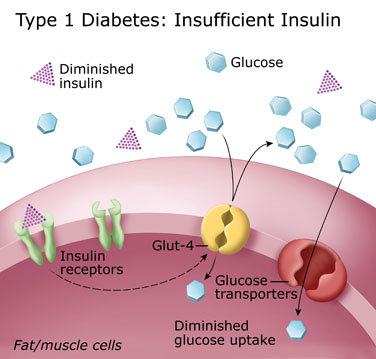
First it is important to know that the sugar you consume is broken into its simplest form, of which the body prefers glucose. In order for body cells to be able to use this glucose for energy, insulin is needed. Insulin is made in the pancreas and then released into the bloodstream as needed (1). There are three types of diabetes:

1. Type I Diabetes

  • The pancreas does not produce enough insulin for cells to be able to absorb glucose
  • Injections of insulin are needed and blood glucose levels should be monitored frequently (2)


2. Type II Diabetes

  • The pancreas can produce enough insulin, but the receptors don't communicate with glucose absorbing transporters 
  • Previously referred to as "insulin resistance" or "adult onset diabetes", although children are now being diagnosed


3. Gestational Diabetes
  • Diabetes can occur during pregnancy, this is why it is important to have proper prenatal care and consult your physician with any concerns


Importance of Carbohydrates:

An important part of diabetes management is understanding the importance of carbohydrates. It is common for those with diabetes to count carbohydrates in number of servings to ensure they are consuming consistently during the day (2). 


References:

1. Franz MJ. Medical nutrition Therapy for Diabetes Mellitus and Hypoglycemia of Nondiabetic Origin. Krause's Food and Nutrition Care Process. 2012.
2. Insulin Injections. Medline Plus. 2014.
3. Carbohydrate CountingAmerican Diabetes Assoc. 2015. 

Tuesday, April 28, 2015

Grocery Sale Success

Although my income has increased slightly since finishing undergrad, there are still financial limitations of being a graduate student. These limitations are noticed in my grocery budget. I am always trying to get as much healthy food for my $1 as possible.

Thankfully, with spring fast approaching, produce sales have been more prevalent. Last time I went through the circular to plan my trip, I was surprised by the number of produce items on sale for the 10 for $10 (with the 11th for free) sale. Often these sales feature heavily processed foods that I usually don't eat (yes on occasion I grab the blue box macaroni). 
The four items pictured were in the 10 for $10 sale!

Not only was produce on sale, but so was whole grain pasta (which I prefer to the its enriched counterpart).

While I'm not a pro at shopping on a budget, there are a few things I've learned.

  1. Check BOTH the local circular and your cabinets as you make your list, keep in mind your calendar and the amount of food you will likely consume (I tend to overbuy when there are good sales but then it often spoils before I use it)
  2. Make and stick to a list, I like to include a budget goal when I shop based on the cost of the items on the list
  3. Strive for the 80-20 rule: 80% of your cart is healthful items and the remaining 20% is foods you enjoy
Please feel free to comment with any helpful grocery shopping tips you have.

Tuesday, April 21, 2015

Taste of Havanna

A couple weeks ago I decided to attend a Spice Box dinner. These dinners are held in the spring semester and are the capstone course for hospitality management students at the  University of Illinois at Urbana-Champaign. Each student selects a theme and guest chef for which the meal is based. Students then prepare and serve the meal on campus. My lab-mate and I decided to attend a Cuban themed meal. 

The first course featured fried ham and dough with three delicious sauces.

The second course was beans and rice.

The third course was more than we could handle with a half-chicken, rice and plantains.


Dessert was caramel flan.

This was my first time dining in the Spice Box, but I have already planned to go back in a few weeks. This is a great project for students to learn how to prepare and manage a fine-dining event.

Photos courtesy of Catherine Metzgar!

Friday, March 7, 2014

Costa Rican Culinary Workshop

Last week, I had the opportunity to attend a culinary workshop at K-State featuring a chef form Costa Rica. I wasn't exactly sure what to expect of Costa Rican cuisine except for fresh ingredients prepared in a simple tasteful way. That is exactly what I got, but the flavor was incredible

Before the lunch, we had a homemade salsa of sorts that included avocado, onion, red pepper, lime juice, lemon juice, and palm hearts. Palm hearts are the center part of young palm trees that are cooked down: they don't have strong flavor but take on the flavor of what they are paired with.

We had two lunches to showcase the different flavors and to take time to enjoy our food. Our first lunch is pictured above and included red snapper, rice and beans with onion and red pepper cooked in coconut milk, and pickled vegetables. I am not a bit fan or traditional coconut, it has a strong flavor for me. However, the coconut that was used to cook with was fresh and didn't have the strong flavor that American coconut does.


Between the two lunches, we had a blackberry sorbet. It was sweet and a nice fresh treat between the meals.

The second lunch (not pictured) was a sort of Costa Rican Sheapard's Pie. I say that because it was simple ingredients layered together and reminded me of the American dish. Rice was cooked with coconut milk, onion and red pepper was layered under chopped fresh green beans with onion and pepper. The next layer had marinated beef. The dish was topped with fried plantains. I had never had plantains: they completed the dish by providing a sweet crunchy flavor.

After the main portion of the workshop, we had a coffee tasting. I greatly enjoy coffee and it was neat to learn about the different origins of coffee. The one thing that I had never really payed attention to was the caffeine content of different roasts of coffee. The lighter roasts actually have more caffeine than dark roasts.

This was my first culinary workshop and I hope to take advantage of other opportunities like this in the future. I was able to attend the workshop because the registration fee was greatly decreased for students ($10 for the whole day) so they could learn from the experience.

I encourage students to seize opportunities like this whenever possible. It's a great way to meet new people and learn about other cultures.

Monday, August 12, 2013

China in New Mexico

My freshman year of college I had the opportunity to participate in a service learning trip over Spring Break. The trip was to Taos, NM a small mountainous community in the north-west part of the state. Not only was I able to learn a great deal about the culture of Taos, but I was also able to learn about China because there were three students from China on our team. 


One evening the three students asked everyone to come to their culture. They had even made a meal for us. I was so surprised at how different their foods are from the Americanized version of Chinese foods. Their dishes were simple most from broths with lots of vegetables (cucumber, cabbage, and other greens mainly). There was little meat in the dishes and they said that one of the dishes would have a whole chicken for the family to eat from, unfortunately, we only had breast cuts of chicken.

All in all, we were able to learn a lot about the culture of China and the simplicity of their dishes.

Wednesday, August 7, 2013

Zucchini Boats

This summer we have had lots of zucchini. That said, we were having a hard time finding new recipes for zucchini that didn't heat up the oven. Luckily last week was cooler and we were able to bake zucchini boats. We used tomatoes, red pepper, salt, pepper, onion, garlic and shredded mozzarella cheese. The zucchini seeds were scooped out, then stuffed and finally baked at 375 for 12 or so minutes (just until they are soft to the fork).
Image Source: http://www.laaloosh.com/2011/07/25/stuffed-zucchini-boats-recipe/

The zucchini doesn't have a strong flavor which allows for it to retain the moisture from the tomatoes and flavors from the other ingredients.  All in all, a healthy addition to our evening meal! I look forward to trying these again as we continue to gather summer squash from the garden. Next time I plan to try them with meat, beans, corn, onion, cheese, and tomatoes.

I use photos from other sources because my photography and editing skills are not that great.

Wednesday, July 31, 2013

Loving the Pizza Pie...College Style

Pizza has always been one of my favorite foods. But it has recently taken on a whole new meaning, of cheap and convenient meals. My version of pizza is also fairly healthy (depending on which vegetables are handy). I start with a tortilla for the crust: it can be flavored, regular or even whole wheat. Then comes the sauce. I prefer a little ranch dressing, but pizza sauce, Italian dressing and salsa also work great. From there you can be creative or just use any vegetables and meat you have.

Things I've used:
  • Tomoato
  • Zucchini
  • Red Pepper
  • Ham
  • Chicken
  • Onion
  • Garlic
  • Corn
  • Black Beans
  • Mozzarella Cheese
I just cook my pizza on a cast-iron griddle, but that's what we have. Anything that heats the pizza through and metls the cheese will work. 

I usually pair my pizza with a salad or fruit, and sometimes there's a baked treat like a brownie! I have a major sweet tooth!

These types of pizzas are great for college students and anyone that wants a quick, easy and fairly inexpensive meal!

Friday, July 19, 2013

Calorie Comparison


As a dietetics student, I hear a lot about the number of calories individuals should consume throughout the day. However, it is still sometimes difficult to picture the calorie densities of certain foods. 

Yesterday I was sent this link. It has 75 pictures of different foods and each is 200 calories. It is so interesting to see how even vegetables compare or butter and a candy bar! Feel free to check it out, it just might surprise you!
 That's a lot of celery for 200 calories and at least 2 whole apples!

Wednesday, July 3, 2013

Healthier Sweet Treat

I have a confession...I have a major sweet tooth! It began when I was younger and became worse when I was in middle school and playing sports! 

Recently, I have started paying more attention to the amount of sugar I am consuming. I have never really liked yogurt, but know it is a healthier sweet/desert option. One day at the grocery store, I picked up a new kind of Greek yogurt to try. I picked it because it was coffee and dark chocolate flavor and I knew the protein would help me feel full!

To my surprise, I really liked the flavor. The type of yogurt is pictured below. The particular flavor that I tried is 100 calories and has 12 grams of sugar, 8 grams of protein and only 1 gram of fat. 
http://www.dairyfoods.com/ext/resources/Food-Photos/Cultured_Dairy/Chobani-bite-300.jpg

This has been my new sweet treat for the past couple of months and is far healthier than a brownie, cookie or slice of cake!

Friday, June 28, 2013

A Whole New World...

Wednesday I had the opportunity to attend a gluten-free group meeting. I didn't really know what to expect but was pleasantly surprised! The meeting was hosted by a local grocery store dietitian. She and her two student interns for the summer (part of the coordinated program at K-State) prepared numerous pizza crusts and pizzas for the group to try. All were made with mixes, doughs or frozen pizzas that could be found at the grocery store.

My knowledge of gluten free baking is fairly limited. I understand that a gluten free diet is free of wheat, barley and rye products. In replacement for wheat flour, various flours and starches are combined to achieve the desired consistency and properties (which varies by product). Flours and ingredients that are commonly mixed (from what I've seen) include: rice flour, tapioca flour, potato starch, and xanthan gum. My only experience with gluten free baking was making muffins for a friend: they didn't turn out that well either!

I was welcomed by many members of the group: there were over 20 that attended. We all tried the various pizza crusts and pizzas. Some were much better than others. One of the members brought a cauliflower crust recipe for everyone to try. Her recipe included cauliflower, egg, cheese, and spices.  

The group was very supportive of me being there to learn about a gluten free lifestyle and some explained personal challenges with baking gluten free. I was so appreciative of this opportunity to learn more about gluten free eating and can't wait to attend next month!

Sidenote: There was also a sample of a new chocolate chip cookie product that was quite tasty (and that's by my standards)! I included the product label for anyone who is curious!

Wednesday, June 26, 2013

A Dash of Culture


I greatly appreciate the link between food and culture, but more importantly how that link is different for each culture. Most notably, I have realized that the link between food and culture is one many Americans take advantage of. As a sophomore in the college of agriculture (my former home), I had the opportunity to travel to Tuscany to learn about food production. This truly was a dream come true! I was going to spend 8 days in ITALY learning about food and culture…oh and eating!


As part of the class, we met weekly and researched history and production of the foods we would be seeing, this research was compiled into a presentation for the rest of the class (16 in all) to learn! We also had weekly Italian quizzes, something I wish I would have taken more seriously.

After a day of travel, we landed in Milan, where we would spend a day before heading to Florence. Florence was our base and from there we went out to see various producers including: parmigiano reggiano cheese, balsamic vinegar, parma hams, gelato, chocolate, and numerous vineyards. We attended two cooking schools in Florence; both were amazing but offered a different perspective on cooking. The first was very serious and professional while the second was much more laid back. While attending the second cooking school, we went to the market. The market gave me a great insight into the culture of Italy. There were fruits, vegetables, baked goods, seafood, and cuts of meat that I had never seen before. The seafood part wasn’t too surprising; I did grow up in Kansas after all!
What I really learned from the trips to the market (we also visited one in Venice), was food is a central part of Italian livelihood. In the US, few individuals sell things they grew or caught themselves. In addition, meals are eaten on the run and not enjoyed as they are in other countries. One of our meals lasted 3 hours, not because we ate that much, but because we were in conversation with one another and enjoying the atmosphere we were in!
        My experience in traveling to Italy was the trip of a lifetime. I was able to learn so much and eat so many wonderful foods! I cannot wait for my next adventure abroad! Please feel free to share comments on places to see and foods to try!